Sunday, 29 September 2013

Through a lens brightly: Some of us are obsessed with obsolete old film cameras

My dog doesn’t seem to care one way or the other.


I’m going with the dog.


I think the problem is that I grew up in a photographic household. Not photogenic — though my mother was fashion-model-pretty and my little brother had beautiful red hair and both were frequent subjects of my father’s lens — just that there was always a lot of photographic stuff lying around: light meters, shutter-release cables, colored filters, tripods, screw-top film canisters, cameras of various sizes (of course), an enlarger, brown jugs of chemicals, plastic trays for mixing the chemicals, rubber-tipped wooden tongs for removing photographic paper from the plastic trays .?.?.


My dad was a serious amateur photographer. His largest camera? That would have to have been his McDonnell-Douglas RF-4C, the reconnaissance jet he flew over Vietnam, taking pictures of things along the scenic Ho Chi Minh Trail. He did not bring that particular camera home.


So I guess I associate cameras with my youth. My serial acquisition of more and more cameras is my way of trying to revisit those innocent days. For what is photography, after all, if not an attempt to go back to the past? Each exposure captures a specific moment, a unique and unrepeatable collection of photons.


Cameras are little time machines.


I think my wife’s argument is probably something like: How many time machines does one man need?


My attempts to revisit the boy of my youth are colliding with the acquisitive man of my middle-agedness. What is disposable income for if not to dispose of it? And what I’ve been choosing to dispose of it on lately is cameras.


This all started last year when I dug my father’s old medium-format Mamiya C3 twin-lens reflex out of a basement cupboard. This is a brick of a film camera — a little bigger than a brick, actually. It is entirely manual. Taking a picture is like loading a trebuchet or starting a Sopwith Camel biplane. There are so many steps: focus the image (by looking straight down through a chimney-style viewfinder), set the aperture (a handheld light meter comes in handy here), set the shutter speed, trip the shutter.?.?.


Wait, why isn’t it working? Ah right, cock the shutter, then trip the shutter.


Hmm, still not working. Oh, forgot to wind the crank that advances the film.


Is it any wonder my family doesn’t want to say “cheese” anymore?


The thing about using the Mamiya is that it gets noticed. Old cameras do. So do new cameras that look like old cameras, like this nifty Fuji I got last year. It joined an assortment — I hesitate to call it anything as orderly as a “collection” — that includes the Olympus Trip 35 that my father bought me 40 years ago, a Canon Canonet that my father-in-law bought my wife 40 years ago and an Olympus XA2 that I bought on eBay. The Olympus was made in the 1980s and is supposedly the camera of choice for a certain breed of hipster street photographer.


I aspire to hipster street photographerdom.


Last month, I was rummaging around in a box of cameras at a Kensington thrift shop — horrible, plastic digital things, mainly — when I unearthed a Pentax ME Super with a 50mm lens.


Despite its name, there is nothing especially super about the 35mm Pentax ME Super. It is not a Leica, or even a Nikon. But it’s a solid thing, satisfying, like a well-balanced hammer. It has dials and buttons and things that go “click.” It does not have a touch screen.


I’m starting to feel about old cameras the way I do about certain LPs: When I see them in thrift shops, I have to buy them, just to rescue them from their cut-rate purgatory. The store wanted 25 bucks but took my $20, plus another $20 for a telephoto lens that I found deeper in the box.


When I got it home, I cleaned it up and replaced the batteries. It works just fine, another camera to point in my loved ones’ faces.


There’s just one thing: I fear I may not be a very good photographer. I don’t know an
f-stop from a bus stop. Maybe instead of cameras, I should be buying photography lessons.


Developing problems


Film may not be dead, but it’s gotten a lot harder to get it developed. Twice recently I have walked into CVS stores with some film only to find them actually removing the processing machines.


CVS told me there are eight locations in our area that still develop 35mm film in-house.
(E-mail me if you want the list.) Other stores can send it out. In a statement, the company’s public relations director, Erin Pensa, said: “We continue to evolve with our customers’ needs, and today all shoppers also have the ability to print photos directly from a smartphone in-store, upload photos directly from Instagram and Facebook, or access CVSPhoto.com to create gifts and keepsakes or order prints for in-store pick-up.”


That’s as it should be, I suppose, but how much soul does an iPhone have?


john.kelly@washpost.com


For previous columns, visit washingtonpost.com/johnkelly.


Article source: http://www.ubergizmo.com/2013/06/sony-dsc-rx100m2-camera/


Incoming search terms:


Through a lens brightly: Some of us are obsessed with obsolete old film cameras

Getting snap-happy with this innovative new camera from Sony

Sony QX10


Sony QX10

– 28 September 2013


‘;

document.write(s);

return;

}


window.google_adnum = window.google_adnum || null;


google_ad_client = “ca-pub-9024837700129787″;

google_ad_output = “js”;

google_ad_type = “text”;


google_ad_channel = ’9868211012,6682650729′;


google_max_num_ads = ’2′;


google_skip = window.google_adnum; /* insert this snippet for each ad call */


Price: €220


Rating: ***


The flipside to Sony making a killer cameraphone is that fewer people will buy their basic standalone compact cameras. This has elicited an innovative response in the form of the QX10, a camera that uses a separate smartphone as a screen.


The gadget is a fully competent camera with its own shutter button, 10x zoom and memory card slot.


But it has no screen of its own: the idea is that you download a free Sony app to your smartphone (any Android) and then pair the two devices.


Presto: you’ll see what the camera is seeing on your smartphone’s screen.


Because the QX10 looks like a lens and not a full camera, it is less intimidating when you wave it about. This sometimes leads to better shots, with people behaving more naturally than they might with a more obvious camera.


The lens is good, if not outstanding: it sports a normal (small) point-and-shoot 19-megapixel camera sensor from f3.3 to f5.9. It does have a power-zoom lens. There’s also a bracket that allows you to attach it to your phone to use it as a ‘normal’ camera.


A higher-end model, the QX100, sports a 20-megapixel, F1.8 lens but will set you back an extra €300.


Irish Independent


Article source: http://www.ubergizmo.com/2013/06/sony-dsc-rx100m2-camera/


Incoming search terms:


Getting snap-happy with this innovative new camera from Sony

Review: Sony"s Cyber-shot QX10 wireless camera lens for iPhone


Sunday, September 29, 2013, 07:31 am PT (10:31 am ET)


Sony’s new Cyber-shot DSC-QX10 wireless camera lens is a first-of-its-kind iPhone accessory that could appeal to many who are in the market for a quality, conveniently pocketable and connected point-and-shoot camera. Unfortunately software issues make the ambitious device far from perfect, though it does earn kudos for being a concept ahead of its time.

QX10


Design


The QX10 features an 18-megapixel Exmor RCMOS 1/2.3-inch sensor with a 10x optical zoom and Sony G lens, derived from the company’s WX2200 point-and-shoot. It also features built-in Optical SteadyShot image stabilization. Video is captured in high-definition 1080p. A review unit was provided to AppleInsider by Sony.


Given the decent quality of modern smartphone cameras, a major selling point here is the 10x optical zoom, something a smartphone camera like the one found in Apple’s iPhone simply cannot offer in a thin profile.


QX10


Those looking for a significant step up in picture quality over their iPhone should consider the QX100, which is twice the price at $500, and sports a 20.2-megapixel Exmor RCMOS sensor with a wide-aperture Carl Zeiss Vario-Sonnar T lens. A formal review of the QX100 from AppleInsider is forthcoming.


The back of the QX10 slides off to reveal a compartment that houses the battery, as well as MicroSD or Sony MemoryStick card. The back panel is attached via cord so it won’t be lost, and inside are printed the unique Wi-Fi SSID and password that allows the iPhone to connect to the lens.


QX10


Users can then cover up the back of the QX10 with a twist-on attachment that allows the camera to clamp on to an iPhone. One of the arms on the back clamp is extendable, meaning the lens can be securely attached to an iPhone even if it’s being housed in a protective case. We had no problem attaching the QX10 to our iPhone 5s encased in a Mophie Juicepack battery case.


When it’s attached, the lens accessory feels securely in place. We had no concerns about the accessory unexpectedly falling off, though given its wireless connectivity, you may find yourself frequently holding it separate from your phone for unique shots.


QX10


The bottom of the QX10 includes a standard tripod mount, as well as space for a wrist lanyard to keep the lens from being damaged. On top are the on/off button and two embedded microphones for stereo sound.


The left side of the QX10 (when attached to the iPhone and facing outward) includes dedicated controls for zoom and shutter. The shutter button is a particularly welcome inclusion, offering tactile feedback when snapping pictures, and granting the ability to autofocus before an image is taken.


QX10


Like the shutter button, the physical zoom controls are also superior to the digital onscreen controls. However, it’s nice that Sony gives users both options ? some who are more acquainted with capturing via their iPhone may find themselves more comfortable with the touchscreen controls available.


Finally, the right side of the device features a tiny inset LCD display that reveals the current battery level, and a physical sliding lock button gives users the ability to remove the twist-off phone mount adapter attached to the back.


QX10


We like the design of the QX10. It’s small enough to fit in a pocket, it fits snugly on an iPhone, and it’s easy to zoom and take pictures with the physical controls.


Setup and functionality


The QX10 connects to the iPhone through a Wi-Fi Direct connection. The unique network name and password are stored inside the device’s battery component, and turning the lens on will activate the network.


Users simply connect their iPhone to the QX10 like they would any other Wi-Fi network. Users cannot be connected to a traditional Wi-Fi data network when using the QX10, but can still access the Internet through cellular data networks.


QX10


There is one potentially crucial flaw that we encountered with the QX10: Wi-Fi overload. We tested the ultraportable camera at a game at Yankee Stadium in the Bronx, and lag between the lens and an iPhone 5s became so much of an issue that at points the device became unusable.


Thankfully, this wasn’t the norm. That’s not to say the connection between the lens and the iPhone was always lag-free. But the stuttering and drop-outs experienced at the baseball game ? where our seats were flooded with Wi-Fi networks ? was especially serious.


QX10


In areas with far less airwave pollution, the connection between the QX10 and our iPhone 5s was relatively reliable. The image could occasionally drop out and not reconnect, prompting us to force-close Sony’s app, which is required to use the device (more on that later).


It should be noted that the QX10 can be more quickly connected to an NFC-capable device, such as many Android smartphones. Apple’s iPhone does not support NFC, and the QX10 does not have Bluetooth Low Energy, so support for the iBeacons feature in iOS 7 will not be forthcoming.


Wireless connectivity between the iPhone and the QX10 is an important component of the versatility of the device. While you can clip the camera lens to the back of your iPhone, and will likely use this setup most of the time, it’s when the iPhone is separated and acting as a remote viewfinder that the versatility of the QX10 truly comes alive.


You can get a few feet away from the lens before the connection to begin to stutter or completely drop out. But really, great distances between the iPhone and QX10 are not necessary to get some pretty interesting shots.


QX10


For example, families getting together for a group picture will no longer need someone to snap the picture for them. The QX10 has its own built-in tripod mount, and can be remotely viewed and controlled from the iPhone. Someone could set up the camera, ensure everyone is in the picture, and snap the picture, all while standing in front of the lens.


And really, this is just the start. With the tiny size of the QX10 lens, and the decent picture quality with a 10x optical zoom, this is a lens that will allow photographers to take shots that wouldn’t otherwise have been possible.


The wireless connectivity of the QX10 is simultaneously its greatest asset and most crucial flaw.


Software


This is where the shine really starts to come off the QX10. Sony’s pocketable wireless lenses are currently reliant on a free application called PlayMemories Mobile, which frankly doesn’t offer much in the way of customization.


QX10


There are digital controls for zoom and shutter, which can be used in place of the physical controls on the lens. And there is no true “manual” shooting mode, as the only three options are “Intelligent Auto,” “Superior Auto,” and “Program Auto.”


Intelligent Auto is a completely automated setting where users simply focus, snap and shoot. The Superior Auto setting snaps a number of pictures and creates a composite.


With the Program Auto option, users are given access to exposure compensation, allowing them to control the exposure of the lens and affect the picture’s brightness.


QX10


A separate settings button allows access to basic features like self-timer, changing image file size, and whether to automatically transfer snapped pictures to the iPhone’s Camera Roll.


Captured at max resolution, pictures are 18.2 megapixels. There’s also an option for 16:9 ratio pictures at 13 megapixels. Sony’s software also gives the option to share pictures to the iPhone at 2 megapixels, to cut down on file size.


QX10


From here, users can also select “Copy from Connected Device” to view the full selection of photos and videos stored on the QX10′s MicroSD card. Content can be selected in bulk and transferred to the iPhone where it can be edited, uploaded, or anything else.


By leveraging the iPhone’s touchscreen, Sony’s software offers a feature that iPhone camera users are likely accustomed to: Tap to focus. Sony already offers this capability on its NEX line of point-and-shoot cameras equipped with touchscreens.


QX10


The PlayMemories app can take upwards of 10 seconds to connect to the camera and enable shooting after it’s been launched. That kind of delay may be a deal-breaker for some. Convenience is key for a camera, and the QX10 fails in that respect on the software front.


It should be noted that the dedicated shutter and zoom buttons on the lens itself, along with its own MicroSD memory card, allow the device to be used to shoot photos on its own, even without a smartphone nearby. But without the PlayMemories app, users are shooting blind, with no viewfinder available.


Getting the camera set up to use an iPhone as a viewfinder requires connecting to it over Wi-Fi, launching the app, and waiting for the connection to be established. Frankly, it’s too long, which makes occasional crashes with the PlayMemories app even more unacceptable.


Making matters worse, we encountered a number of times where the application would simply freeze, seemingly after losing connection to the QX10. Force closing the application and restarting would usually resolve the issue and reestablish connectivity.


QX10


Thankfully, there is a chance that the functionality of the QX10 could be expanded through third-party apps, as the camera is not tied to Sony’s PlayMemories software. Well-reviewed iPhone app Camera360 has told AppleInsider that it will support the QX10 with an update coming in early October.


Article source: http://www.photographyblog.com/news/nikon_1_nikkor_32mm_f_1.2/


Review: Sony"s Cyber-shot QX10 wireless camera lens for iPhone

Pentax K500 DSLR camera

K500 DSLR


Pentax K500


The Pentax-original Auto Picture mode automatically selects the most appropriate shooting mode for each scene or subject.  Since the Pentax K500 sets all important camera settings – such as shutter speed, aperture, white balance, saturation, contrast and sharpness – the photographer can concentrate on image composition. The Pentax K500 also offers 19 Scene modes, including Night Scene Portrait, Pet and Backlight Silhouette, to simplify the photographing of difficult scenes or subjects, which can be challenging for entry level digital SLR photographers.


Pentax K500 camera


Pentax K500 price


In addition to the standard rechargeable lithium-ion battery capable of capturing approximately 480 images with a single recharge, the Pentax K500 can also be powered by four AA-size batteries with the use of the optional D-BH109 AA Battery Holder. Since AA-size batteries can be easily obtained almost anywhere around the world, there’s no worry about battery shortages, even when travelling. The Pentax K500 + 18-55 mm DAL lens is available for a retail price of £ 449.99.


Pentax K500


Pentax K500


Article source: http://www.gottabemobile.com/2013/07/10/iphone-5s-camera/


Pentax K500 DSLR camera

Sony NEX-5T digital camera

Sony NEX-5T


Sony NEX-5T


WiFi lets you connect the Sony NEX-5T with your smartphone, PC or TV and wirelessly transfer photos or videos. It’s also the first interchangeable lens E-mount Sony camera with NFC, giving the extra convenience of One-touch wireless connection with Android smartphones and tablets for easy sharing and even remote control of the Sony camera. There’s no set-up needed – simply touch your mobile device against the Sony NEX-5T and a wireless connection’s made instantly. Embedded Smart Remote Control lets you trigger shutter release from your smartphone: it’s great for group shots when you don’t want to be left out of the action.


NEX-5T


Advanced Fast Hybrid AF


Don’t miss those split-second moments, from spontaneous portraits to vibrant street scenes. Advanced Fast Hybrid AF combines phase-detection autofocus to track fast-moving subjects with contrast-detection AF for absolute precision. It’s a winning combination that delivers speedy, accurate focusing in any scene. And don’t forget – sometimes, it’s all about you. Great self-shot portraits are simple with the tiltable LCD screen that flips up to 180° for a comfortable view with the camera held at arm’s length. Auto Portrait Framing takes the guesswork out of good-looking selfies, cropping your composition for polished results. There’s also a digital level gauge that makes it easy to keep horizons steady and true. Serious photographers have plenty of opportunities to fine-tune their artistic vision. The Sony NEX-5T offers extra flexibility with its dedicated control dial and assignable Fn button for instant recall of frequently-needed functions.


Sony NEX 5T


PlayMemories Camera Apps


There’s a growing range of downloadable PlayMemories Camera Apps that add more fun and exciting functions to NEX-5T. Pick from a choice of free and paid-for picture effects and handy utilities. It’s a great way to broaden your creative options as your confidence and ambitions increase. A brand-new Lens Compensation app lets expert users save and apply subtle image corrections for different lenses. Adjustable correction can be applied to compensate for peripheral shading, chromatic aberration and barrel/pincushion distortion.


Sony NEX 5T camera


Sony NEX-5T accessories


A range of optional accessories offers stylish protection for the camera. Exclusively designed in a range of colours to fit the Sony NEX-5T and NEX-5R, the LCJ-EBA is a thin and light Body Jacket that also allows full use of the NFC function offered by the Sony NEX 5T. The LCS-BBK Soft Carrying Case slips easily into a travel bag. The LCS-EMJ Soft Carrying Case features an expandable zipper section to accommodate different sizes of attached lens. The versatile BC-QM1 Battery Charger can quickly charge batteries for recent ? and Handycam models, and also can supply power to your smartphone via USB. The ACC-PFW1 Accessory Kit includes the PCK-LS1EM LCD Protect Sheet to keep fingerprints at bay, plus the VF-K405MP MC Protector (40.5mm diameter) and NP-FW50 Rechargeable Battery Pack.


Article source: http://www.gottabemobile.com/2013/07/10/iphone-5s-camera/


Sony NEX-5T digital camera

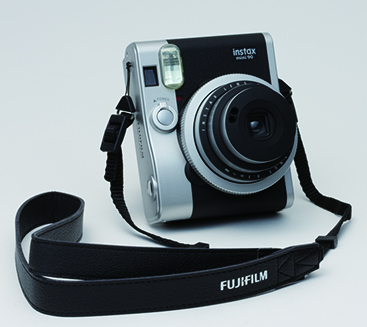
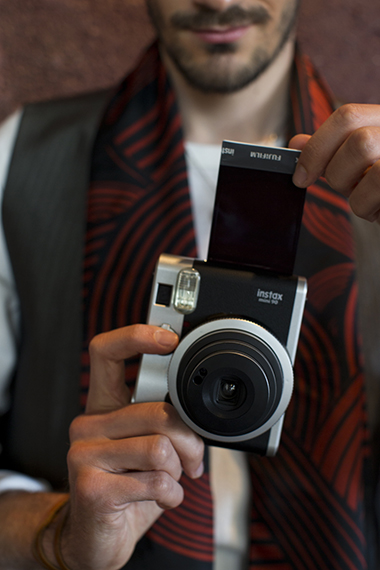
Fuji launches Instax Mini 90 as digital age "antidote"

The retro-style camera, which received its UK launch this afternoon, includes a Bulb mode for night scenes and light trail shots, for example, plus a double-exposure option and macro feature.


The Mini 90 – which produces credit card-sized prints – costs £129.99, including 20 sheets of instant film.


Fujifilm UK’s photo imaging director David Honey said that, in an age of smartphones and Instagram, Fuji still has its feet firmly planted in both the traditional and digital imaging camps.


The flash-equipped model borrows its design, in part, from Fuji’s X-range of digital cameras.


Honey said Fuji wants Instax to be enjoyed by a ‘wider variety of photographers’, not just by the teenage, female market, for example.


Speaking at Ronnie Scott’s Jazz Club in central London, where the Mini 90 received its official UK debut, Honey added: ‘A lot of people who grew up with digital imaging don’t know what traditional photography is.’


Fujifilm UK product manager Gabriel Da Costa described the camera as the ‘grown-up brother’ of the Instax range, adding: ‘Instant print cameras are the perfect antidote to the disposable digital age and the format illustrates the renaissance that film photography is enjoying at the moment.’


The firm has reported brisk trade for both its Instax and single-use cameras over recent weeks.


For details visit www.instax.co.uk or call 01234 572049.


Article source: http://mobile.blorge.com/2013/09/26/sony-tries-new-marriage-of-camera-and-phone/


Fuji launches Instax Mini 90 as digital age "antidote"

Pentax K-3 DSLR Press Images Leaked

Press images have been leaked this week for the new Pentax K-3 DSLR camera which is expected to be priced at around $1300 for the body only when it is officially launched.


From the leaked images it can be seen that the new Pentax K-3 DSLR camera will be a APS-C based camera and rumours suggest it will come with a new flash system.


Pentax K-3


Other rumoured features of the Pentax K-3 DSLR camera include Tracking autofocus, and the AF sensors are *all* cross sensors.


Ricoh has also been rumoured to has played a pear in developing the display on the rear of the case which is similar to the K5. As information comes to light on exact specifications for the Pentax K-3 DSLR camera we will keep you updated as always.


Source: Photo Rumors


Article source: http://mobile.blorge.com/2013/09/26/sony-tries-new-marriage-of-camera-and-phone/


Pentax K-3 DSLR Press Images Leaked