Tuesday, 31 December 2013

Milton Keynes Studio a Destination for All Photography Requirements in UK

New York, NY — (SBWIRE) — 12/31/2013 — Milton Keynes studio specialises in offering photographers, commercial clients and creative agencies, one of the best studio rental facilities in UK. “Studio One” features an infinity cove, flexible lounge set, wet room featuring overhead showers, luxury four- poster bedroom set, graffiti wall and contemporary set. This photography studio hire is perfect for fashion, portraits, glamour, product and commercial photography.


Unique Capture has developed its “Studio Two” for its commercial photography clients. It features an independent changing room along with flexible diner/ lounge set and contemporary kitchen set. If one is planning to show external windows, doors, or a full staircase, then this is the studio to hire. The working hob and ovens make this studio suitable for all kinds of food photography/ videography. Lastly, “Studio Three” is used exclusively by the company’s in- house photographer to develop product 360’s and pack shots for some of the biggest brands in UK.


Located just minutes away from M1’s junction 14 and within 2 miles from the train station of Central Milton Keynes, this professional photography studio hire is pretty easy to reach. Plenty of on- site free- parking is available, where photographers from all backgrounds and culture are given a warm welcome by every studio technicians upon arrival. Some of the services offered by Milton Keynes studio hire include designing and building of set, providing qualified and highly skilful studio technicians, Photoshop tuition and re- touching, offering photography training, providing food/ drink/ light refreshments, studio lighting workshops, make- up and stylists, models and photographers.


This photo studio hire can help in custom building any kind of set to the client’s exact specifications. The design and build team will ensure that the client’s creative brief gets fulfilled to the minute of details. The studio technicians here are a bunch of highly talented individuals who will be helping to get the most out of the studios. Expert training and tuitions are offered within the studio as well. It is offered either in small groups or in one- on- one session. The in- house photographers always aim in helping out new talent by expanding their knowledge along with the portfolio. These photographers also conduct sessions where they teach young photographers re- touching skills. Lighting workshops are also conducted here which one can be easily availed of by visiting the website. This rent photography studio also takes great pride in providing professional make- up artists, stylists, models and photographers. One only needs to get in touch with the studio and post their exact requirements.


About Milton Keynes Studio

URL: http://miltonkeynesstudio.com


Milton Keynes Studio is the official website of the UK- based studio, Unique Capture Studio. This studio excels in providing the best studio hiring facilities within this country at reasonable rates possible. The studio house three photography studios, with each of them feature top- of- the- line facilities and services.


Media Contact

Miltonkeynesstudio
http://miltonkeynesstudio.com


Article source: http://petapixel.com/2012/04/17/nikon-camera-control-an-open-source-app-for-remote-dslr-control/


Incoming search terms:


Nikon Rumor Roundup, or: What to Expect in the Next Few Months

nikondf_4


The folks over at Nikon Rumors have been hard at work keeping everybody up on what you can expect from Nikon, but if you’re like us, you just don’t have the time to follow rumors day in and day out. So here’s a roundup of what the most exciting and plausible rumors that should give Nikon lovers some idea of what to expect in the next couple of months.


Nikon D4s/D4x


nikond4_mini


Every indication is that there is indeed a D4 followup in the works. According to NR, production on the Df was halted for a couple of months for the sole purpose of pushing this camera before the winter Olympic. Couple that with the fact that NPS Japan recently stopped selling the D4, and it seems likely we’ll see a D4s or D4x before long.


However, contrary to previously-reported rumors, NR doesn’t believe it’ll arrive on January 17th. So what will?


Nikon D3300


d3300_2


The big CES reveal, if rumors are to be trusted, will be the Nikon D3300. But wait, says you, CES starts the 7th not the 17th. Right you are. It seems the January 17th date is most likely the date that the D3300 will be announced in the Middle East and Africa, the rest of us should see it on the 7th.


Lending credence to this rumor is the fact that the Nikon D3200 two-lens kit is already marked as discontinued on BH Photo. Alright, on to mirrorless.


Nikon 1 V3


nikonv2


A redesigned Nikon 1 V3 camera is almost certainly on its way, we just don’t know when it will arrive. It was initially rumored for a CES release, but slow mirrorless sales in Europe and the US might entice Nikon to follow Canon’s lead and release the new camera only in Asia.


If that is the case, NR expects the camera to make landfall, not at CES, but rather at the CP+ show in February.


Glass


10-100mmunderwater


In addition to the three cameras above (sorry folks, no word on the mythical D400) it looks like we’ll be seeing a few new lenses from Nikon as well.


The long-rumored Nikkor 35mm f/1.8G FX lens and a collapsible 18–55mm f/3.5–5.6G DX lens are both expected to arrive on the 7th with the D3300. Other rumored lenses — such as a Nikon 1 10-100mm f/4-5.6 underwater lens for the AW1, a new Nikkor AF-S 300mm f/4G and a 16mm fisheye lens — are also probably on the way, but no word yet on when they might arrive.


And that’s about it. NR maintains that there are a few point-and-shoots also in the works, one of them potentially sporting a 1-inch sensor to compete with Sony’s RX100II, but those rumors are too vague and insubstantial to lend much credence to as of yet.


Of course, this very likely isn’t everything swirling around the rumor mill, so drop us a line in the comments to let us know if we forgot something or if you want to give us your take on the gear listed above.


Article source: http://petapixel.com/2012/04/17/nikon-camera-control-an-open-source-app-for-remote-dslr-control/


Incoming search terms:


Sony Launching Case For Xperia Z Ultra To Accommodate QX10/QX100 Lens ...

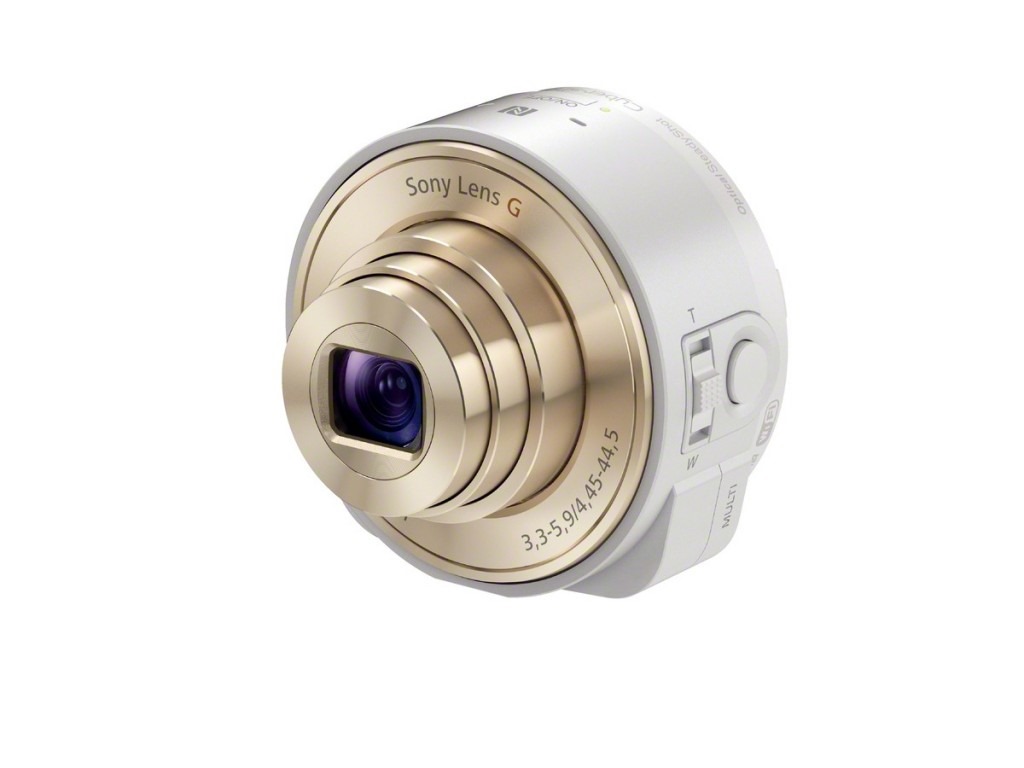
How’s that new Google Play Edition Xperia Z Ultra? Pocket-stretchingly good, you say? The Z Ultra’s massive frame might be an advantage in some regards, but it’s a problem in others – Sony’s QX10/QX100 lens cameras don’t mount quite right. The company will be rectifying that with a new Z Ultra case that has an attachment for the lenses, so you can finally rest easy.


Xperia-Z-Ultra-QX10-QX100-case


The hard case for the Z Ultra is very similar to the version for the Xperia Z that was released alongside the lens cameras. The case has only been announced in Hong Kong so far, but will probably worm its way out to other regions before long. The pricing is set at roughly $30, but then you have to buy the pricey lens camera to take advantage of it.


[XperiaBlog]


Article source: http://petapixel.com/2012/04/17/nikon-camera-control-an-open-source-app-for-remote-dslr-control/


Incoming search terms:


Pentax Astrotracer Review: Astrophotography Made Easier

Build and Design
The O-GPS1 unit measures approximately 1.875 x 1.75 x 1.25 inches and utilizes a single AAA battery as a power source – weight is approximately 2.1 ounces. Pentax recommends removing the battery from the GPS if it is not going to be in use for a long period of time; also, battery changes should be undertaken with the GPS not mounted on the camera. The unit attaches to the camera via the hot shoe, and this location combined with unit’s light weight have no significant effect on the camera’s handling when shooting handheld. The obvious downside to the hot shoe attachment point is that the GPS and a flash cannot be used simultaneously. It is important to note the camera must not be picked up by the GPS unit alone as the unit and/or camera hot shoe are likely to be damaged.


In addition to Astrotracer, the K-3 also offers an electronic compass display that includes latitude, longitude and elevation along with date and time; a circular compass rose display including a continuous digital readout of the exact azimuth (horizontal direction or bearing) the camera is pointed at is also provided. Azimuth readings are based on true north, not magnetic north. Here’s a look at the electronic compass display.


Overall construction is of composite materials and the unit was assembled in the Philippines. Pentax lists an MSRP of $249.95 for the unit, which can also be had at reputable New York internet vendors for $199 as this is being written.


Setup And Shooting Performance
The GPS unit is simple to use for the electronic compass feature. With both camera and GPS unit powered up, the GPS will automatically acquire satellites, displaying a steady blue light adjacent to the satellite icon on the unit when three or more satellites are detected – three satellite acquisition is the minimum required for GPS data to be recorded to captured images.


The monitor status screen also displays a satellite icon whose color indicates the general number of satellites acquired: a yellow “2D” icon indicates three satellites; a green “3D” icon is four or more and, not unexpectedly, a red icon signifies GPS data is unavailable. You can see the icon in the top left of the electronic compass shot above.


Acquisition time on the GPS can vary depending on the amount of open sky overhead–buildings and terrain can block signals from satellites–but was generally a minute or less.


Utilizing the Astrotracer feature is a bit more complex, but not onerously so. With the camera and GPS on, “precise calibration” must be performed. Precise calibration involves rotating the camera in excess of 180 degrees along three separate axes once satellite acquisition has been obtained. Sounds more complicated than it is–airplane pilots will quickly recognize the axes as corresponding to pitch, roll and yaw. For all you non-aviators out there, consider this your first, very basic bit of ground school. The rotations don’t need to be in any particular order, but the sequence must be completed within 1 minute after initiating the process.


“Pitch” involves rotating the camera and lens above and below the horizon (say, from pointed at your feet up and past directly overhead to a point behind you); “yaw” rotates the camera from right to left (or vice versa) along the horizon and “roll” rotates the camera in place from upright and horizontal to past fully inverted and horizontal, like the motion of turning a doorknob or unscrewing the lid of a jar. How precise is “precise”?  Very precise, it seems–when I first tried precise calibration in my driveway, the camera consistently would not complete the calibration satisfactorily. This location featured the garage about 15 feet behind me, and a large, bushy tree about 15 feet to my left. Moving about 50 feet to the front lawn, away from tree and garage and into more open sky all around me, precise calibration was acquired on the first try. The good news here is precise calibration should be easily accomplished in the wide vistas that typically are part and parcel of night sky work; if you’re trying to shoot a band of sky from the bottom of a slot canyon, you may have trouble. If you forget the nature of the rotations, the K-3 gives you a diagram at the onset of the calibration sequence as a reminder.


For Astrotracer use, precise calibration is required at the exact location you’ll be using the feature before each use. Switching locations or shutting off the camera/GPS at the present location and powering up again later requires a new precise calibration. As a practical matter, I hand held the camera while performing the precise calibration sequence, then mounted the camera onto the ballhead/tripod at the same spot. As with all night sky photography, have your camera lens focused to infinity, tape the focus ring so that it can’t be rotated by accident during shooting and set the camera and lens for manual focus before initiating captures.


During Astrotracer operation the camera must be in bulb (B) mode, and the Astrotracer menu page allows you to set an exposure time from 10 seconds to 5 minutes–a “maximum trace duration” readout tells you the actual length of time Astrotracer will be available at any location. The following 4 shots show the menu sequence that takes you into the Astrotracer feature to the point where you set the exposure time.


We’ve got the camera set to shoot with Astrotracer, let’s go find some clear night skies and see what happens.


Image Quality
In the article I wrote on Night Sky Photography for this website, I mentioned that trial and error had led me to limit my shutter length to 20 seconds when shooting at 24mm in order not to produce star trails. Since then, I’ve received my winter Really Right Stuff catalog which included an article on night sky work that included reference to a “500″ rule which I was unfamiliar with. (Really Right Stuff is a California company specializing in a variety of camera support equipment. I’m not affiliated with them but use some of their equipment including tripods, ball heads, panorama shooting rails and large telephoto lens support brackets). The rule postulates that to estimate the length of an exposure you can use at any particular lens focal length for unguided night sky work without producing star trails that you divide your effective focal length into 500, with the result being the answer in seconds. The results using the rule correspond to my observations in the field, so I used the 500 rule as the basis for the unguided night sky shot that follows.


When I reviewed the K-3 it mounted the 18-135mm kit lens, but night sky work was shot using the Pentax HD 20-40mm f2.8-4 DA Limited lens.


With the K-3′s APS-C sensor, the 20-40 shot at 30mm at the wide end in 35mm equivalents and application of the 500 rule gave a 16.66 second maximium exposure time, which I rounded down to 15 seconds. Ideally, you’d set your exposure time for the Astrotracer, lock up the K-3 mirror and fire the shutter by wireless remote to minimize vibrations. Lacking a remote, I fired the shutter via the camera’s self-timer, using the 12 second delay. The baseline shot was made at 800 ISO, f/4 for 15 seconds.


Now the fun began–with precise calibration accomplished and ISO remaining at 800, I set the Astrotracer for 3 minutes, well over the threshold time limit for no star trails. All the night shots (including the baseline unguided shot) were post processed using Photo Ninja software. A 3 minute exposure should have resulted in an image with pronounced star trails, but the Astrotracer did an excellent job of maintaining the stars as points of light.


Next, I pointed the K-3 more toward the eastern horizon to capture the constellation Orion (the hunter), along with some ridgeline, airplane trails and light from desert communities in southeast San Diego county. This shot demonstrates one characteristic of the Astrotracer that has to be considered if you opt to place terrestrial subjects in the frame–the sensor is being moved by the camera to follow the apparent motion of the sky, which results in terrestrial subjects being blurred by the sensor movement as they do not shift position relative to the camera.


I set the ISO to 400 and shot a 2 minute exposure looking north towards the constellation Cassiopeia, primarily as one of its neighbors is the Andromeda galaxy, M31. In the shot that follows about–way down the frame and just a bit left of the centerline is an elongated fuzzy blob with some haze extending to the upper left and lower right away from the central blob–that’s Andromeda, some 2.5 million light years away. Andromeda is the nearest major galaxy to our own Milky Way and is visible under good conditions with naked eye or binoculars.


Moving back to Orion, I zoomed the lens in to 40mm (60mm in 35mm equivalents) and set a 90 second exposure time at 400 ISO. In this shot Orion takes up much of the frame; the three fairly bright stars arranged vertically are Orion’s belt–his sword extends down at about a 45 degree angle from a bit right of the lowest star in the belt, and includes another fuzzy blob, the Orion nebula. The red giant star Betelgeuse forms one corner of his torso to the left of the belt. Orion is about 1344 light years away. The significance of this shot is that increasing the focal length of the lens creates a narrower field of view, which causes the apparent motion of the stars across the frame to increase for any given period of time. Guiding errors are more apparent with narrower fields of view, but the Astrotracer did a very good job with the longer lens.


Finally, I zoomed back out to 20mm on Orion, set the ISO to 200 and captured a 3 minute shot that includes the planet Jupiter, the bright object near the left edge in the bottom third of the frame. The ability to use lower ISO numbers with long exposure times allows you to capture fainter objects without the high ISO noise penalty exacted by having to ramp up ISO to produce acceptable exposures during short, unguided exposure times.


CONCLUSIONS
The Astrotracer feature on select Pentax DSLRs is a wonderful addition to the toolbox of Pentax shooters wishing to go beyond basic, unguided and short exposure time night photography. With the addition of a relatively modest-priced Pentax GPS, Astrotracer offers up to 5 minutes of celestial tracking utilizing the camera’s built in shake reduction system. Since the shake reduction is built into the camera, Astrotracker is available with longer focal length lenses that can provide more detail on distant objects such as the Orion nebula or Andromeda galaxy. Besides the ability to lower ISO sensitivity, another bonus of longer guided night exposures is the ever-present possibility that a bright meteor may choose to fly through the frame during your exposure. If you look closely at the 3 minute/800 ISO shot at 100% magnification, across the top about 1/5th of the frame is a long, faint satellite trail. The Astrotracer’s strong suit is celestial photography with just sky in the frame–terrestrial objects will tend to blur due to the tracking motion of the camera sensor.


There are aftermarket manufacturers that make guiding equipment that can accommodate your DSLR if you want to make long, guided exposures, but the price floor for this equipment starts around $500 and goes up from there. One advantage of this equipment is that your guiding time is not limited by sensor shift parameters; the entire lens and camera are moved in coordination with the apparent motion of the stars. You can also spend some serious money and get a dedicated astronomical telescope and piggyback your DSLR onto it for long exposures. But a $200 Pentax GPS is sounding like a real bargain to get a modest guiding capability–the Astrotracer may be limited to a 5 minute exposure, but what it does it does very well.


In fact, I’ve been so impressed with the performance of the Astrotracer and the photo potential of longer, guided exposure times that I’m one of those folks who’s now in the market for some of that high-priced aftermarket guiding gear…


Pros


  • Very good tracking performance

  • Relatively inexpensive

  • Simple to use


Cons


  • 5 minute tracking maximum per shot

  • Terrestrial objects in shot will show some blurring due to tracking


Article source: http://www.broadwayworld.com/bwwart/article/Nikon-Releases-New-Df-Digital-SLR-Camera-20131113


Pentax Astrotracer Review: Astrophotography Made Easier

Build and Design
The O-GPS1 unit measures approximately 1.875 x 1.75 x 1.25 inches and utilizes a single AAA battery as a power source – weight is approximately 2.1 ounces. Pentax recommends removing the battery from the GPS if it is not going to be in use for a long period of time; also, battery changes should be undertaken with the GPS not mounted on the camera. The unit attaches to the camera via the hot shoe, and this location combined with unit’s light weight have no significant effect on the camera’s handling when shooting handheld. The obvious downside to the hot shoe attachment point is that the GPS and a flash cannot be used simultaneously. It is important to note the camera must not be picked up by the GPS unit alone as the unit and/or camera hot shoe are likely to be damaged.


In addition to Astrotracer, the K-3 also offers an electronic compass display that includes latitude, longitude and elevation along with date and time; a circular compass rose display including a continuous digital readout of the exact azimuth (horizontal direction or bearing) the camera is pointed at is also provided. Azimuth readings are based on true north, not magnetic north. Here’s a look at the electronic compass display.


Overall construction is of composite materials and the unit was assembled in the Philippines. Pentax lists an MSRP of $249.95 for the unit, which can also be had at reputable New York internet vendors for $199 as this is being written.


Setup And Shooting Performance
The GPS unit is simple to use for the electronic compass feature. With both camera and GPS unit powered up, the GPS will automatically acquire satellites, displaying a steady blue light adjacent to the satellite icon on the unit when three or more satellites are detected – three satellite acquisition is the minimum required for GPS data to be recorded to captured images.


The monitor status screen also displays a satellite icon whose color indicates the general number of satellites acquired: a yellow “2D” icon indicates three satellites; a green “3D” icon is four or more and, not unexpectedly, a red icon signifies GPS data is unavailable. You can see the icon in the top left of the electronic compass shot above.


Acquisition time on the GPS can vary depending on the amount of open sky overhead–buildings and terrain can block signals from satellites–but was generally a minute or less.


Utilizing the Astrotracer feature is a bit more complex, but not onerously so. With the camera and GPS on, “precise calibration” must be performed. Precise calibration involves rotating the camera in excess of 180 degrees along three separate axes once satellite acquisition has been obtained. Sounds more complicated than it is–airplane pilots will quickly recognize the axes as corresponding to pitch, roll and yaw. For all you non-aviators out there, consider this your first, very basic bit of ground school. The rotations don’t need to be in any particular order, but the sequence must be completed within 1 minute after initiating the process.


“Pitch” involves rotating the camera and lens above and below the horizon (say, from pointed at your feet up and past directly overhead to a point behind you); “yaw” rotates the camera from right to left (or vice versa) along the horizon and “roll” rotates the camera in place from upright and horizontal to past fully inverted and horizontal, like the motion of turning a doorknob or unscrewing the lid of a jar. How precise is “precise”?  Very precise, it seems–when I first tried precise calibration in my driveway, the camera consistently would not complete the calibration satisfactorily. This location featured the garage about 15 feet behind me, and a large, bushy tree about 15 feet to my left. Moving about 50 feet to the front lawn, away from tree and garage and into more open sky all around me, precise calibration was acquired on the first try. The good news here is precise calibration should be easily accomplished in the wide vistas that typically are part and parcel of night sky work; if you’re trying to shoot a band of sky from the bottom of a slot canyon, you may have trouble. If you forget the nature of the rotations, the K-3 gives you a diagram at the onset of the calibration sequence as a reminder.


For Astrotracer use, precise calibration is required at the exact location you’ll be using the feature before each use. Switching locations or shutting off the camera/GPS at the present location and powering up again later requires a new precise calibration. As a practical matter, I hand held the camera while performing the precise calibration sequence, then mounted the camera onto the ballhead/tripod at the same spot. As with all night sky photography, have your camera lens focused to infinity, tape the focus ring so that it can’t be rotated by accident during shooting and set the camera and lens for manual focus before initiating captures.


During Astrotracer operation the camera must be in bulb (B) mode, and the Astrotracer menu page allows you to set an exposure time from 10 seconds to 5 minutes–a “maximum trace duration” readout tells you the actual length of time Astrotracer will be available at any location. The following 4 shots show the menu sequence that takes you into the Astrotracer feature to the point where you set the exposure time.


We’ve got the camera set to shoot with Astrotracer, let’s go find some clear night skies and see what happens.


Image Quality
In the article I wrote on Night Sky Photography for this website, I mentioned that trial and error had led me to limit my shutter length to 20 seconds when shooting at 24mm in order not to produce star trails. Since then, I’ve received my winter Really Right Stuff catalog which included an article on night sky work that included reference to a “500″ rule which I was unfamiliar with. (Really Right Stuff is a California company specializing in a variety of camera support equipment. I’m not affiliated with them but use some of their equipment including tripods, ball heads, panorama shooting rails and large telephoto lens support brackets). The rule postulates that to estimate the length of an exposure you can use at any particular lens focal length for unguided night sky work without producing star trails that you divide your effective focal length into 500, with the result being the answer in seconds. The results using the rule correspond to my observations in the field, so I used the 500 rule as the basis for the unguided night sky shot that follows.


When I reviewed the K-3 it mounted the 18-135mm kit lens, but night sky work was shot using the Pentax HD 20-40mm f2.8-4 DA Limited lens.


With the K-3′s APS-C sensor, the 20-40 shot at 30mm at the wide end in 35mm equivalents and application of the 500 rule gave a 16.66 second maximium exposure time, which I rounded down to 15 seconds. Ideally, you’d set your exposure time for the Astrotracer, lock up the K-3 mirror and fire the shutter by wireless remote to minimize vibrations. Lacking a remote, I fired the shutter via the camera’s self-timer, using the 12 second delay. The baseline shot was made at 800 ISO, f/4 for 15 seconds.


Now the fun began–with precise calibration accomplished and ISO remaining at 800, I set the Astrotracer for 3 minutes, well over the threshold time limit for no star trails. All the night shots (including the baseline unguided shot) were post processed using Photo Ninja software. A 3 minute exposure should have resulted in an image with pronounced star trails, but the Astrotracer did an excellent job of maintaining the stars as points of light.


Next, I pointed the K-3 more toward the eastern horizon to capture the constellation Orion (the hunter), along with some ridgeline, airplane trails and light from desert communities in southeast San Diego county. This shot demonstrates one characteristic of the Astrotracer that has to be considered if you opt to place terrestrial subjects in the frame–the sensor is being moved by the camera to follow the apparent motion of the sky, which results in terrestrial subjects being blurred by the sensor movement as they do not shift position relative to the camera.


I set the ISO to 400 and shot a 2 minute exposure looking north towards the constellation Cassiopeia, primarily as one of its neighbors is the Andromeda galaxy, M31. In the shot that follows about–way down the frame and just a bit left of the centerline is an elongated fuzzy blob with some haze extending to the upper left and lower right away from the central blob–that’s Andromeda, some 2.5 million light years away. Andromeda is the nearest major galaxy to our own Milky Way and is visible under good conditions with naked eye or binoculars.


Moving back to Orion, I zoomed the lens in to 40mm (60mm in 35mm equivalents) and set a 90 second exposure time at 400 ISO. In this shot Orion takes up much of the frame; the three fairly bright stars arranged vertically are Orion’s belt–his sword extends down at about a 45 degree angle from a bit right of the lowest star in the belt, and includes another fuzzy blob, the Orion nebula. The red giant star Betelgeuse forms one corner of his torso to the left of the belt. Orion is about 1344 light years away. The significance of this shot is that increasing the focal length of the lens creates a narrower field of view, which causes the apparent motion of the stars across the frame to increase for any given period of time. Guiding errors are more apparent with narrower fields of view, but the Astrotracer did a very good job with the longer lens.


Finally, I zoomed back out to 20mm on Orion, set the ISO to 200 and captured a 3 minute shot that includes the planet Jupiter, the bright object near the left edge in the bottom third of the frame. The ability to use lower ISO numbers with long exposure times allows you to capture fainter objects without the high ISO noise penalty exacted by having to ramp up ISO to produce acceptable exposures during short, unguided exposure times.


CONCLUSIONS
The Astrotracer feature on select Pentax DSLRs is a wonderful addition to the toolbox of Pentax shooters wishing to go beyond basic, unguided and short exposure time night photography. With the addition of a relatively modest-priced Pentax GPS, Astrotracer offers up to 5 minutes of celestial tracking utilizing the camera’s built in shake reduction system. Since the shake reduction is built into the camera, Astrotracker is available with longer focal length lenses that can provide more detail on distant objects such as the Orion nebula or Andromeda galaxy. Besides the ability to lower ISO sensitivity, another bonus of longer guided night exposures is the ever-present possibility that a bright meteor may choose to fly through the frame during your exposure. If you look closely at the 3 minute/800 ISO shot at 100% magnification, across the top about 1/5th of the frame is a long, faint satellite trail. The Astrotracer’s strong suit is celestial photography with just sky in the frame–terrestrial objects will tend to blur due to the tracking motion of the camera sensor.


There are aftermarket manufacturers that make guiding equipment that can accommodate your DSLR if you want to make long, guided exposures, but the price floor for this equipment starts around $500 and goes up from there. One advantage of this equipment is that your guiding time is not limited by sensor shift parameters; the entire lens and camera are moved in coordination with the apparent motion of the stars. You can also spend some serious money and get a dedicated astronomical telescope and piggyback your DSLR onto it for long exposures. But a $200 Pentax GPS is sounding like a real bargain to get a modest guiding capability–the Astrotracer may be limited to a 5 minute exposure, but what it does it does very well.


In fact, I’ve been so impressed with the performance of the Astrotracer and the photo potential of longer, guided exposure times that I’m one of those folks who’s now in the market for some of that high-priced aftermarket guiding gear…


Pros


  • Very good tracking performance

  • Relatively inexpensive

  • Simple to use


Cons


  • 5 minute tracking maximum per shot

  • Terrestrial objects in shot will show some blurring due to tracking


Article source: http://www.broadwayworld.com/bwwart/article/Nikon-Releases-New-Df-Digital-SLR-Camera-20131113


Sony launches dedicated Xperia Z Ultra cases for QX lens cameras


Though Sony’s crazy QX10 and QX100 lens cameras can attach to most smartphones, the company naturally favored its own Xperia Z and Z1 handsets by creating custom cases for those devices. Now it’s doing the same for its crazy-large 6.4-inch Xperia Z Ultra, according to our sister Engadget Chinese site. A new attachment cover in black or white will fix either camera to its latest phablet for HK$238 (about $30) on top of the price of the QX10 ($249) and QX100 ($499). If you’ll recall, that’ll boost your smartphone’s shooter to either an 18.2- or 20.2-megapixel monster, respectively, with the latter boasting the same sensor as the formidable Sony RX100 Mark II. It’ll arrive next month in Hong Kong, and while Sony hasn’t divulged availability elsewhere, we can picture it hitting the US soon as well.


0 Comments


Share


Article source: http://www.broadwayworld.com/bwwart/article/Nikon-Releases-New-Df-Digital-SLR-Camera-20131113


SONY CORPORATION : SONY"s New 960H Technology Delivers Super-Wide ... - 4

Kemp, Texas (PRWEB) December 31, 2013


Rugged Cams has updated all of their Analog DVR’s to support the new 960H Technology. Why? Because it is the single biggest advance in analog technology in decades, and is now approaching Megapixel resolution. Truly stunning!


For years, analog technology has been stuck at 720×480 as the highest resolution achievable. Many DVR’s still can’t record at that size “real time” (30 fps/channel). This, many in the industry believed, was as good as analog was ever going to get. It wasn’t bad. In fact, it looked pretty darn good, but it was a long way from megapixel resolutions. Many users wanted more, and the only way to get there was Megapixel cameras (IP or HD-SDI). For this reason, most people thought that analog was dying a slow death.


Then SONY (and also another company almost simultaneously), came along and improved Analog so much, that the picture format had to change from the standard 4:3 ratio (SD), to the better 16:9 format that HD uses.


SONY figured out a way to capture much more resolution, and in doing so, almost touched 1000 pixels wide – which is where most Megapixel cameras begin. Truly a game changer, and the technology is sure to extend the life of analog for many more years to come. In fact, SONY is already producing analog cameras at 720p, However, DVR’s have not yet caught up to this resolution at this time, but they are expected to within the next year more than likely. SONY says that they have likely stretched the analog CCD camera sensors as far as they can go, so the new 720p analog cameras will likely use CMOS chipsets.


CMOS is what most IP cameras and HD-SDI Megapixel cameras use to reach ultra-high resolutions. However, CMOS cameras have not advanced enough to be able to deal with darkness as well as analog does. It is a known fact that if there is a need to see well in dark conditions, analog cameras can deliver a better picture than CMOS cameras, which tend to devolve into “black noise”. Analog cameras can deal with dark conditions much better, but that may not always be the case. Scientists are working to improve CMOS sensors, but any advances have only been incremental so far.


True 16:9 Format – Just like your PC Monitor


The real beauty of 960H technology, is the fact that most of the monitors used for DVR’s these days are 16:9 format monitors (4:3 monitors are harder to find, and are also more expensive as well). When viewing regular analog DVR’s on this monitor, it is probably stretching the picture to fit the screen. This can result in distorted pictures and certainly misrepresents the scale of objects and people, and also distances, especially from left to right in the picture, because of the stretching. Now the resulting Live images and recorded footage will be correctly displayed on the monitor.


Completely Backwards Compatible


The 960H DVR’s are completely backwards compatible with all previous DVR Recording formats and all previous cameras, no matter the resolution. In other words, if there is an existing camera that is only 600 lines (or less), the DVR can be set to simply record at D1 or smaller. Any camera can be recorded at any resolution with these new DVR’s.


What Is Needed To Take Advantage Of 33% More Resolution With 960H?


To take advantage of this new revolution, it requires two things: a 960H compatible camera, and a 960H DVR. Existing cameras will still work just fine with these new DVR’s. All of the recording resolutions of the past are still available. This new technology doesn’t make any cameras obsolete. Simply use what cameras are already there, and add new 960H capable cameras for views that need the width or increased resolution. It’s that easy.


The Same Lens Sees MUCH Wider Now Than Ever Before


Enjoy the much larger picture sizes and see more width than ever before – with the same lens! Since the new 960H technology allows for a picture that is 960 pixels wide – as opposed to the 720 pixels of older cameras – there is a gain of more than 33% in width. That means that the lens is now seeing MUCH wider than it did at D1 Resolution (720×480).


Make A Jump Toward 720p – With The New 960H Technology!


Read the full story at http://www.prweb.com/releases/2014/01/prweb11453156.htm


SONY CORPORATION : SONY"s New 960H Technology Delivers Super-Wide ... - 4

Report Names Canon, Nikon and Sony as the Only Survivors in the Camera ... - Android Headlines

nikon-coolpix-android-xl


It was only a matter of time before smartphones started hurting every camera maker in the industry, and according to a new report from Reuters, only the 3 big ones will survive, mostly thanks to their entrenched branding:


 ”Only those who have a strong brand and are competitive on price will last — and only Canon, Nikon and Sony fulfill that criteria” 


Everyone else should be wiped out from the market, and according to IDC the compact camera sales will drop by a whooping 40 percent this year. Some companies like Panasonic have already reported such losses for their overall camera sales for the April-September period.


I would go even further and say that unless Nikon and Canon have a strong strategy to enter in the mobile market, either by licensing and selling its camera technology and lenses to smartphone markets, so they can use them in their smartphones, then Sony will be the last one standing, since it’s already combining the know-how from the camera division with the smartphone division.


Nikon and Canon are DSLR giants, and I’m sure they’ll remain in the camera business for a while longer, but Sony is also attacking them in that market with mirrorless cameras, which made up 36 percent of Japan’s interchangeable lens camera shipments in January-October. So Nikon and Canon are getting disrupted at the low-end/compact camera level because of smartphones, but also at the high-end, where they’ve been slow to adapt to the mirrorless trend and more compact DSLR cameras.


Sony has a lot of potential in cameras, whether it’s in smartphones or professional cameras, which is why it was so puzzling Sony hasn’t been one of the OEMs with the best smartphone cameras around, at least until the Xperia Z1. They’re finally getting more aggressive in mobile camera hardware (although I think they could be even more aggressive), and once Google fixes the camera software issues in Android next year, they shouldn’t be held back by bad stock camera software either, and they’ll be able to show their true potential.


I do have a slight worry that they will have a conflict of interest and will not want to make smartphone cameras that are “too good” and threaten their DSLR market, but hopefully that won’t turn out to be true. It would certainly be the wrong way to go for Sony if they kept their smartphone cameras back on purpose.


As for Canon and Nikon, it would be smart of them to partner up with companies like HTC, Motorola, LG and so on, and give them some of their know-how and technology to make amazing mobile cameras. It may not be an “ideal” solution from their point of view, because they may not want to help smartphones become even better than they are, but I hope they realize that’s going to be inevitable, and they might as well try to make some money from it, rather than wait until smartphones are eating most of their sales.


Category: Android News


Article source: http://allthingsd.com/20121112/fujifilms-xf1-camera-blends-old-school-style-with-advanced-control-%E2%80%A8%E2%80%A8/


Incoming search terms:


The best cameras of 2013

2013 was a great year for new cameras. There were full frame mirrorless shooters which can rival all but the very best DSLRs, compacts good enough to make you leave your smartphone in your pocket, and DSLRs which can shoot better video than they’ve ever been able to. Join Gizmag as we take a look back at some of our favorite cameras of 2013.


Sony Alpha 7


The Sony Alpha 7 manages to squeeze a full frame sensor into a small mirrorless camea


The biggest camera release of 2013 was a surprisingly small pair of cameras, the Sony A7 and A7R. This mirrorless interchangeable lens duo manage to squeeze full frame sensors (and the associated image quality) into devices which are not only smaller than their full frame DSLR counterparts, but in many cases mirrorless cameras with less impressive sensor dimensions.


The Sony A7 only features a 24.3 megapixel sensor, compared to the 36.4 megapixel one in the A7R. However, because it’s faster in terms of autofocus and burst speed shooting, as well as being cheaper (US$1,700 compared to $2,300), it’s a better bet for most photographers. Both devices also feature goodies like built-in Wi-Fi capability and tilting screens.


Nikon Df


The Nikon Df could be the DSLR for those of us who remember, and possibly over romanticize...


The Nikon Df could be the DSLR for those of us who remember, and possibly over romanticize, shooting with film SLRs. It puts photography square and center by shunning video recording while featuring physical access to manual controls via mechanical dials. Its retro-inspired design (if you don’t look at the back) and use of magnesium alloy delivers a package which looks and feels reminiscent of SLRs of old.


However, the Df isn’t all old-school. Inside there’s the same impressive 16.2-megapixel FX sensor as the flagship D4, the Nikon EXPEED 3 image processing engine and a 39-point autofocus system. The $2,800 Df also boasts the same level weather-sealing at the D800 and is compatible with the optional WU-1a Wireless Mobile Adapter.


Leica M


The new Leica M is the first Leica rangefinder to use a CMOS sensor, Live View and shoot H...


In 2012 Leica announced that the successor to the M9 would drop the number and simply be known as a the Leica M, and this year the camera was finally released … instantly prompting the sort of gear-lust in photographers that only a new Leica is capable of inciting.


The first Leica rangefinder to use a CMOS sensor, Live View and shoot Full HD video, the new M, which costs $7,000, has been described by many as the best performing digital Leica yet. And it’s not too bad in the looks department either, even Jony Ive and Marc Newson struggled to improve on it.


Olympus OM-D E-M1


The Olympus E-M1 is a powerhouse that can deliver the goods for most photographers in term...


The mirrorless Olympus OM-D E-M1 was somewhat overshadowed by the full frame sensor in the Sony A7, because it costs almost as much and only features a relatively small Micro Four Thirds 16 megapixel sensor. But the E-M1 is a powerhouse that can deliver the goods for most photographers in terms of both image quality and performance.


Ergonomically, it handles better in the hand than most other mirrorless cameras and bulkier DSLRs. The E-M1 also has a fast and effective autofocus which is capable of keeping up with most subjects and built-in Wi-Fi capabilities. When paired with a good lens, of which there are plenty of MFT options, it can produce fantastic images. Because the smaller sensor only needs smaller lenses it’s easier on the back when carrying it around too.


Canon EOS 70D


The Canon EOS 70D has Dual Pixel CMOS AF which makes video and Live View focusing faster a...


While you can shoot great quality video with most DSLRs, the one thing that consistently lets them down is a stuttering autofocus. The Canon EOS 70D was released in 2013 with the aim of changing that by adopting Dual Pixel CMOS AF which makes video and Live View focusing faster and smoother. Given how well this technology has been received we’d expect to see this in other Canon DSLRs in 2014.


In addition to its video credentials, the Canon EOS 70D is also a solid performing photographic DSLR which features a 20.2 megapixel APS-C CMOS sensor, a 19-point (all cross-type) phase detection AF system and a burst speed of 7 fps. It also has wireless connectivity built-in, enabling the sharing of images and remote shooting via iOS or Android smartphones or tablets.


Sony RX10


The Sony RX10 could well be the best bridge camera ever made, it has a large sensor and a ...


The Sony RX10 could well be the best bridge camera ever made. The product category is normally one defined by compromise – bridge cameras offer a great focal range, but this is normally at the cost of image quality because they use variable maximum aperture lenses and small sensors.


The Sony RX10 changes this by adopting a 20.2 megapixel one-inch type sensor combined with a constant F2.8 aperture zoom lens, offering a 35-mm-format focal range equivalent to 24-200 mm. The camera also boasts Full HD video recording, Wi-Fi and NFC for easy pairing. The only drawback is that to accomplish all of this, the camera had to be bigger, heavier and, at $1,300, more expensive than many other bridge cameras..


Panasonic GM1


The Panasonic Lumix GM1 is the smallest mirrorless interchangeable lens camera


One of the long-standing promises of mirrorless cameras was that they would be much smaller than their DSLR counterparts. The Panasonic Lumix GM1 certainly delivers. While it might not have the same power and controls as the Lumix GX7, it is truly tiny, measuring just 98.5 x 54.9 x 30.4 mm (3.88 x 2.16 x 1.2 in).


With a pancake prime it’s a (just about) pocketable camera to be reckoned with, though with larger lenses can feel a bit unbalanced despite a sturdy magnesium-alloy shell with aluminum dials. The Panasonic GM1 also has built-in Wi-Fi for sharing images and video, as well as remote shooting via an iOS or Android devices.


Fujifilm X100S


The Fujifilm X100S retains the retro good-looks of the original X100, but gets a performan...


The Fujifilm X100 is sometimes referred to as the camera which sparked the retro revolution when it was revealed in 2010 … and with those retro good-looks and quality fixed focal length lens, it’s not hard to see why. So it was no surprise that when, in 2013, Fujifilm updated the device with the X100S, the company didn’t alter much to the way that it looks.


Things that did change include the pairing of a 16.3 megapixel APS-C X-Trans CMOS II sensor with the 23-mm F2 lens for capturing more detail and better low-light performance. Autofocus speed and performance also received a much requested boost in the new camera.


Ricoh GR


Despite featuring a DSLR-like APS-C sensor, the Ricoh GR retains its discrete compact-like...


Fujifilm isn’t the only company competing in the large-sensor fixed-lens category. Notable additions in 2013 were the release of the Nikon Coolpix A and the Ricoh GR, which has a respected lineage which goes back to classic film street shooters and is designed for easy single-handed operation.


Despite featuring a DSLR-like APS-C sensor, the Ricoh GR retains its discrete compact-like appearance, unless you want to add the optional optical viewfinder. A fixed 18.3-mm F2.8 lens means the camera also keeps the same 28-mm focal length (35-mm-format equivalent) as previous generations, though it also has a 35-mm equivalent crop mode, too.


Sony RX100 M2


The Sony RX100 M2 is a surprisingly substantial upgrade adding Wi-Fi capabilities, a tilti...


The Sony RX100 was one of the best cameras in 2012. It offered a level of image quality not normally seen in compact cameras – thanks to a one-inch-type sensor – while at the same time remaining pocketable. It was a compelling reason to own a compact camera in addition to your smartphone.


But, just in case that wasn’t enough, Sony updated the camera in 2013 with the Sony RX100 M2, and surprisingly it was a substantial upgrade. The addition of Wi-Fi and NFC capabilities, a tilting screen and a more sensitive sensor make the M2 an even better reason to leave your smartphone in your pocket when you want to take a photo.


Summing up and looking forward…


We’ve highlighted our favorite cameras from the past 12 months, but there have been so many good releases that we couldn’t include them all. We’re sure you’ll have your own recommendations, and we’d love to know what they are, and why, via the comments.


Though there were some great cameras released in 2013, several product categories were either ignored, or weren’t due their scheduled updates. For those, 2014 could be a big year. Key announcements are likely to include updates to flagships, with the Nikon D4 rumored to be getting its mid-life upgrade very soon. It’s also thought that flagship APS-C sensor DSLRs could get some long overdue love with replacements for the Nikon D300S and Canon 7D.


We also expect to see better and more powerful mirrorless cameras which attempt to make DSLRs irrelevant. This year the Sony A7 and Olympus OM-D E-M1 have given us more proof, if it were needed, that the future of interchangeable lens cameras is going to be a mirrorless one. And we can’t wait to see what’s on offer this time next year.


Wireless capabilities and integration with smartphones have already become the norm for new cameras, but we’re curious to see if anyone else takes the Sony route of external camera-in-a-lens devices to give smartphone cameras a boost, or whether smartphone cameras will improve to a point that makes certain camera types pointless.


Article source: http://www.thinkdigit.com/Digital-Cameras/Nikon-D610-DSLR-Camera_18825.html